
Part of the ‘Exploring Cornwall’ blog
The southern side of Cornwall is best known for its quaint harbours, pretty-as-a-picture villages, tranquil beaches and luscious countryside. We managed to see a lot and ticked Falmouth, Charlestown, Eden, Fowey, Mevagissey and Polperro off the bucket list.
We based ourselves in Falmouth during this part of our stay, so when you get to that part of the blog, you’ll find some helpful tips on where to eat and drink as well.
Charlestown
This unassuming little Georgian village and port on the south coast may look a bit lacklustre, but it’s actually a Hollywood star! It has featured in countless movies including Treasure Island, The Three Musketeers and Alice in Wonderland.
But perhaps Charlestown is most well known for being the film set for the popular TV production ‘Poldark’ which perhaps explains why an otherwise sleepy village is as popular as it is. On the day when we visited, it certainly had that mean, moody, atmospheric movie-look to it.
Interesting fact: For a good while, Charlestown’s port was actually ‘off limits’ to anyone other than film crews and those who lived there! It reopened fully again in 2017
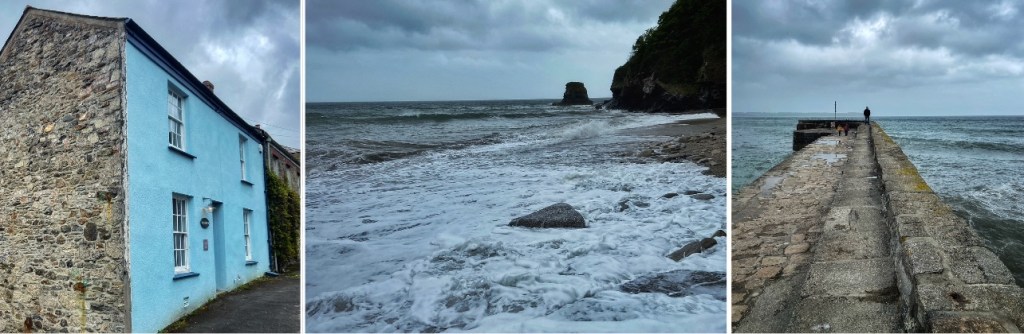
Although it doesn’t go as ‘overboard’ as it probably could, you will find the few shops in this small port to be full of the obligatory Poldark postcards, tea towels and other tacky souvenirs to prove you’ve been – all for an inflated price, of course.
There’s also a Shipwreck Heritage Centre situated in the port itself for anyone wanting to learn more about the mysterious seas around Charlestown.
The Eden Project
Let’s face it, you can’t really venture all the way to Cornwall and not go and see the world famous ecological Eden Project, can you?
The Eden Project opened in 2001 and is still one of Cornwall’s biggest attractions – if not the biggest – famous for its impressive environmental campaign. It sits on the site of a huge crater and its giant bubble-shaped biomes are iconic the world over.
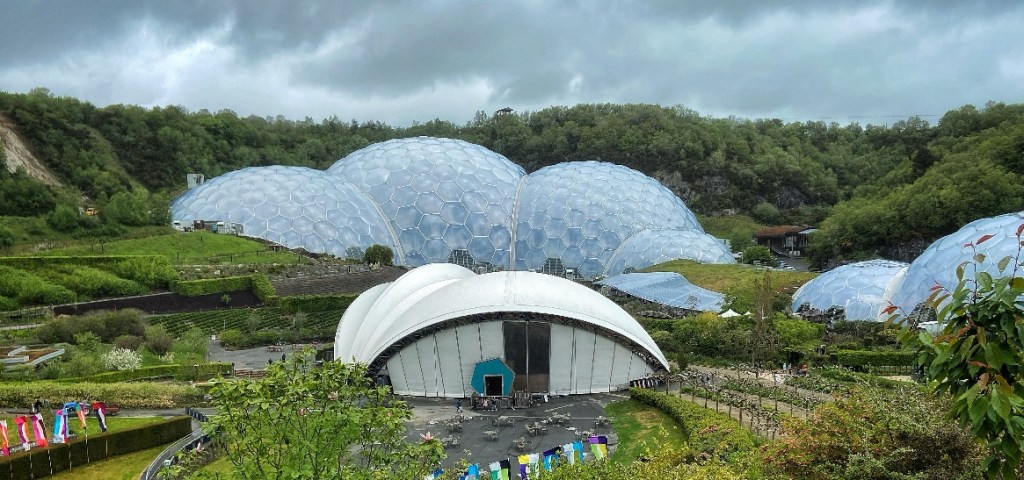
The Rainforest Biome at the Eden Project is said to be the largest rainforest in captivity! It stands at over 160 foot tall and it’s scorching too! With average temperatures of between 25° – 30° all year round, this made a welcome break from the unseasonal stormy weather we had been experiencing in Cornwall, albeit a tad on the humid side (especially when wearing the mandatory Covid face mask). I bet it can feel almost unbearable in the Summer!
If you’re of the green fingered persuasion, you can get lost for hours just looking at the variety of tropical flowers and plants they have on show, as you make your way higher up into the biome. As you go around the biome, you’ll see lots of packets hanging from the trees. These contain the eggs and larvae of wasps and lacewings which eat the pests that would otherwise eat the plants.
Eden even grows its own bananas, rubber, coffee, and chocolate in the Rainforest Biome! Mocha anyone? It’s also home to all sorts of creatures and bugs – from frogs, to caterpillars, to lizards and honey bees (fortunately no amphibian or reptile sightings for me!). If you’re very lucky, you might catch sight of an exotic bird, like the funky little fella below. The hair envy is real.

Next door is the Mediterranean Biome. This is somewhat smaller (and cooler!) than its rainforest cousin and brings together Western Australia, California and South Africa into one giant greenhouse, again showcasing the diversity of its plant life.
Once you’ve exhausted the biomes, you have the expansive gardens to explore, with yet more plants and sculptures. There’s also the indoor exhibition ‘Invisible Worlds’, but truth be told, I didn’t think there was much to see other than a centrepiece called ‘Infinity Blue’ that blows out vapour rings – and a giant granite egg-like sculpture called ‘Seed’.
At the end of your visit, be sure to stop by the Eden shop, which sells all sorts of everything – and all ethically sourced with the planet in mind, naturally.

Falmouth
When arriving in Cornwall, Falmouth was our first base of the entire trip. Falmouth is a hugely popular and bustling town with a handsome harbour that overlooks the River Fal on the Roseland Peninsula.
Like many of the Cornish seaside towns, Falmouth is brimming with olde-worlde cobbled streets tucked away from view. Always inquisitive in new places, I couldn’t resist venturing down the narrow alleys to see where they led and what I could find…
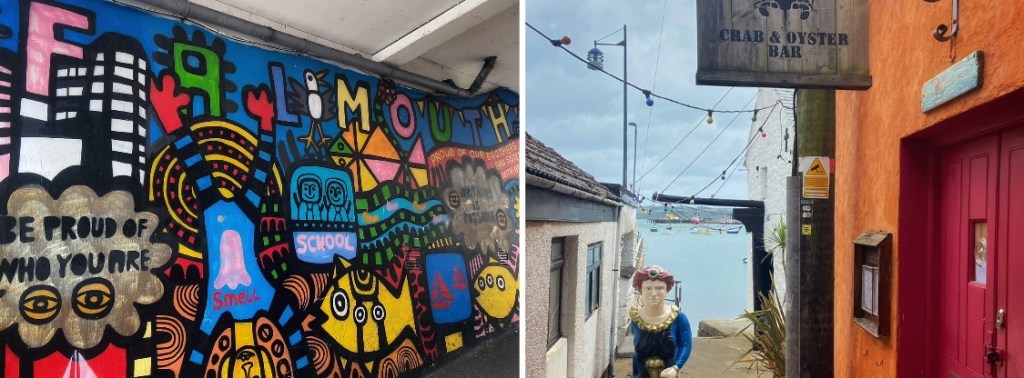
The town itself makes a real effort to impress – lined with brightly coloured bunting, fashionable shops, cosy cafes and seafront houses with slate roofs and whitewashed walls. There’s art galleries galore, antique shops, a vast array of weird and wonderful pubs and bars and some truly great places to eat (more on that coming up). Falmouth is not a place where you’re left wanting, that’s for sure!
In the 18th and 19th centuries, Falmouth had a lucrative maritime trade and is impressively the third deepest natural harbour in the world. For anyone interested in finding out more about this side of Falmouth, you can learn all about its nautical history at the ‘National Maritime Museum’ which sits on the harbour front and has a panoramic viewing tower looking out across the bay.
Falmouth also boasts not just one beach, but three: Gyllyngvase, Maenporth and Swanpool. We walked to the one nearest to town, “Gylly”. As far as beaches go, this has picture-perfect sea views, cliff walking, lifeguards and soft golden sands – there’s really very little wrong with it. If you’re a surfer, body-boarder, cold water swimmer, walker or sun-worshipper, you’ll love it.

Given its vibrancy and diversity, it’s clear to see why Falmouth is a hit with surfers, seafaring fisherfolk, foodies and students alike. In fact, anyone studying in Falmouth and living away from home for the first time must think all of their Christmases have come at once!
For those of you planning to stop in Falmouth long enough to sample the all-important social culture, it would be remiss of me not to share with you some watering hole and culinary finds (we tried and tested extensively!).
First up, the Chinz Symposium is exactly what it says on the tin – a chintzy, crazy, cool bar where you can expect to enjoy an espresso martini alongside dinosaurs and superhero dolls adorning every crevice – or sup IPA in a jungle-themed room filled with mirrors and African art pieces. There’s also live music, cheese boards and toasties on offer too. Winner.
Next – Beerwolf Books. Although deceptive in title, this is a prime drinking spot! You’ll find it tucked up a little side street looking all innocent, but once inside you will find a trendy attic set up, with a selection of booze, beats and clientele. It’s a place where book nerds mingle with urban hipsters in sweet harmony. Table service is on tap through the simple act of changing the mood lighting provided at each table. Inspired.
If you’re after something a little special for dinner, Restaurant Four will serve you up something wonderful, that looks as good as it tastes. It’s only a small place, so be sure to book in advance to avoid disappointment – oh and go for the scallops to start! Mind. Blown.

Falmouth proved to be the perfect base to explore Cornwall’s south and I’d highly recommend at least one overnighter here to get the true experience of Falmouth after dark too.
Fowey
No, it’s not pronounced ‘Fowee’. The locals say ‘Foy’ – rhyming with ‘joy’. Or ‘ploy’ perhaps, to confuse tourists into thinking they are uneducated?
Some call Fowey the south-coast sister of Padstow in the north, given that it is a popular working port, holiday favourite and home to the rich and famous (Dawn French calls it home). As we walked around, we marvelled at the stunning properties along Fowey’s ‘millionaires row’ that we would buy if our lottery ticket came in.
Like it’s northern sibling, Fowey has lots of little shops selling traditional Cornish products and it has plenty of options for eating that morning’s fresh catch
.
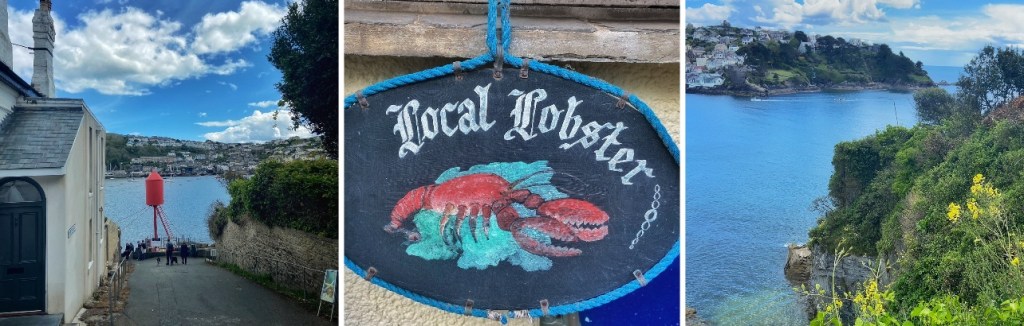
Fowey also offers boat trips (and boat hire), should you want to explore wider and if you’re a bit of a history buff, there’s also St Catherine’s Castle to explore too. Back in medieval times, Fowey was best known for accommodating large cargo ships importing French wine and transporting pilgrims travelling to Spain. Today, it’s is still a major export of China clay.
We spent a lovely afternoon in Fowey, leisurely walking around the streets and boat-watching. As it was surprisingly sunny, we took a short stroll from the harbour down to Readymoney Cove for a well-earned ice cream too. A holiday staple.
When planning your south Cornwall itinerary, do ensure Fowey makes the cut!
Mevagissey
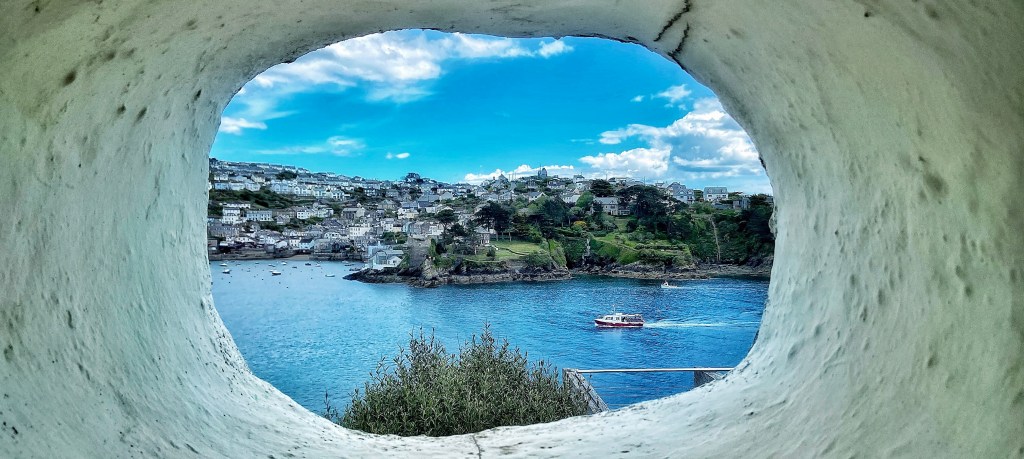
Just a short drive from Fowey is Mevagissey – and yes, you guessed it, another pretty harbour! However, what makes Mevagissey perhaps a little different from the likes of Fowey and Padstow is that it’s retained its original character far more, having not been spoiled by the overspill of holiday rentals or succumbing to wealthy influences.
Unfortunately, we didn’t stop as long as we had intended as – you’ve guessed again – the heavens opened and put stop to play. But we did at least get to poke our noses into some of the handful of shops along the quay, refuel with a pasty….and fall victim to a hungry seagull!

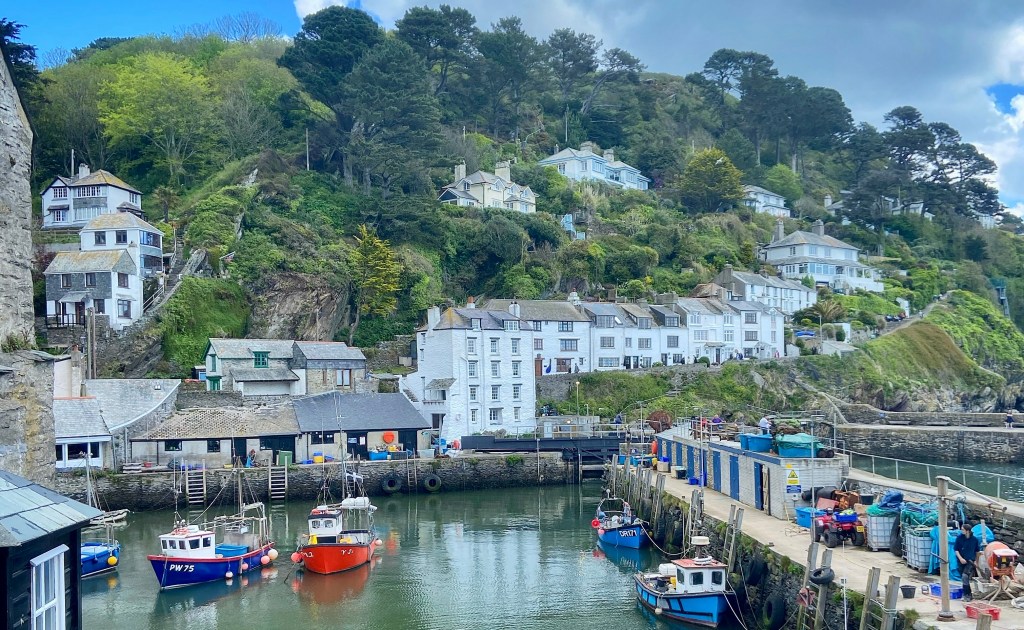
Polperro
And just like that – I saved the best until last.
Legend has it that Cornwall was once inhabited by giants who shared the land with fairies and piskies (pixies). If that’s true, then I can imagine they all lived in perfect harmony in the majestic village of Polperro!
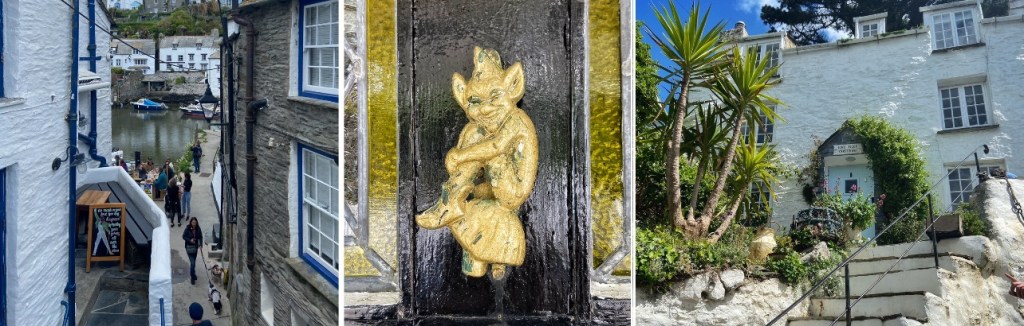
In the 18th and 19th centuries, Polperro was a smugglers hide out! Many of the village folk would allegedly hide all sorts of booty and duty free goods from the excise officers. When navigating the nooks and crannies, it certainly does feel very ‘smuggler like’ – with each narrow alleyway leading to another interesting passageway. It’s almost maze-like. In fact, Polperro reminded me of a place I’ve visited in North Wales – Portmeirion – the type of place that looks like a film set and feels too perfect to be real.
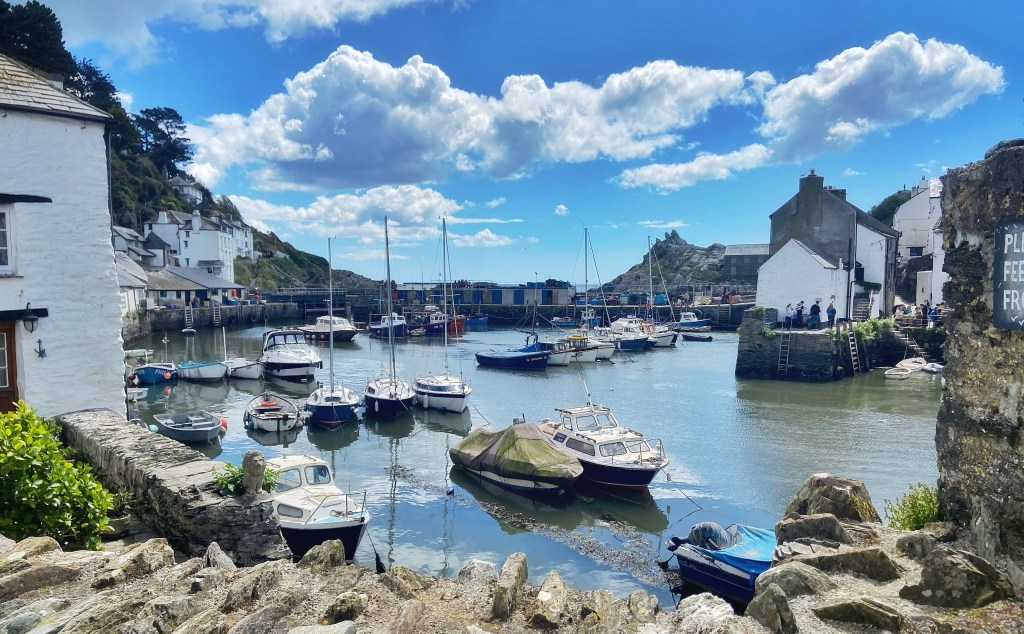
If you have the time, you can visit the Smugglers Heritage Museum to learn more about this fascinating history.
Although Polperro is understandably a favourite with tourists, there is still a genuine traditional village feel to it, with a number of locals still living in their traditional whitewashed Cornish cottages. We spotted a gorgeous ‘shell house’ and even a police station too.
The village has a bakery, pasty shop, ice cream shop and a range of salty old pubs and welcoming restaurants. It also sells locally made goods such as pottery, paintings, jewellery and needle work crafts.
In true ‘Southern style’ Polperro has a fishing harbour that is still used by working fishermen. In the sunshine, you can be forgiven for forgetting you’re not in the Mediterranean – it’s absolutely idyllic and most definitely a place I want to return to soon!


 Sun, See and Suitcase